Our Blog
Useful articles and news
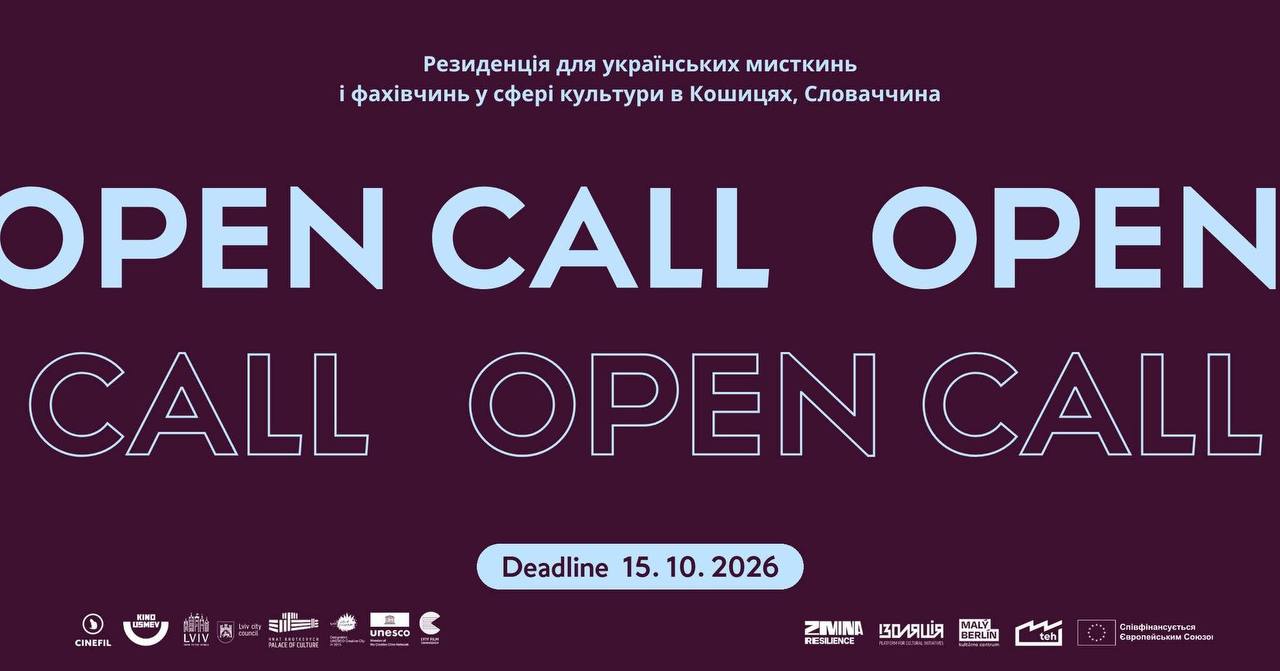
Applications are now open for a one-month arts residency in Slovakia for Ukrainians
Ukrainian women writers, media artists, musicians and cultural managers living in Ukraine are invited to apply for a one-month artistic residency at Kino Úsmev in Košice, Slovakia. The programme will take place in November 2026 and will focus on developing new creative works on the theme of sustainability. The residency is part of the international HERside project, which supports women in the cultural and creative sectors by helping them to develop their own projects and raise the profile of their work. What does the residency offer? Participants will receive: • €600 gross — a stipend for the duration of the residency; • up to €350 to cover travel expenses; • accommodation in Košice for the duration of the programme. Who can apply? We invite women working in the cultural and creative sectors who meet the following criteria: • are resident in Ukraine and aged 18 or over; • have a working knowledge of English; • are able to travel to Slovakia and legally reside there for the duration of the residency; • are able to participate in the programme for the entire month. How to apply? The application form must be completed in English. 🔗 Application form: https://forms.gle/4PQS4jX7H6mcWgQ6A 📅 The deadline for applications is 15 October 2026. About the HERside project HERside brings together two UNESCO Creative Cities: Lviv, City of Literature, and Košice, City of Media Arts. The central theme of the project is resilience: the ability of people and institutions to maintain unity, work and develop in the face of war and other global challenges. The project supports women in the cultural sector – both those who create and implement creative initiatives, and those who present them to a wider audience. The residency provides female artists with a space to work on new projects, pursue professional development and engage in international collaboration. It should be noted that HERside is being implemented as part of the ZMINA: Resilience project, with the support of the IZOLYATSIA Foundation (Ukraine) and the organisation Malý Berlín (Slovakia), and in partnership with the Trans Europe Halles network (Sweden). The project is co-funded by the European Union’s ‘Creative Europe’ programme. Co-funded by the European Union.
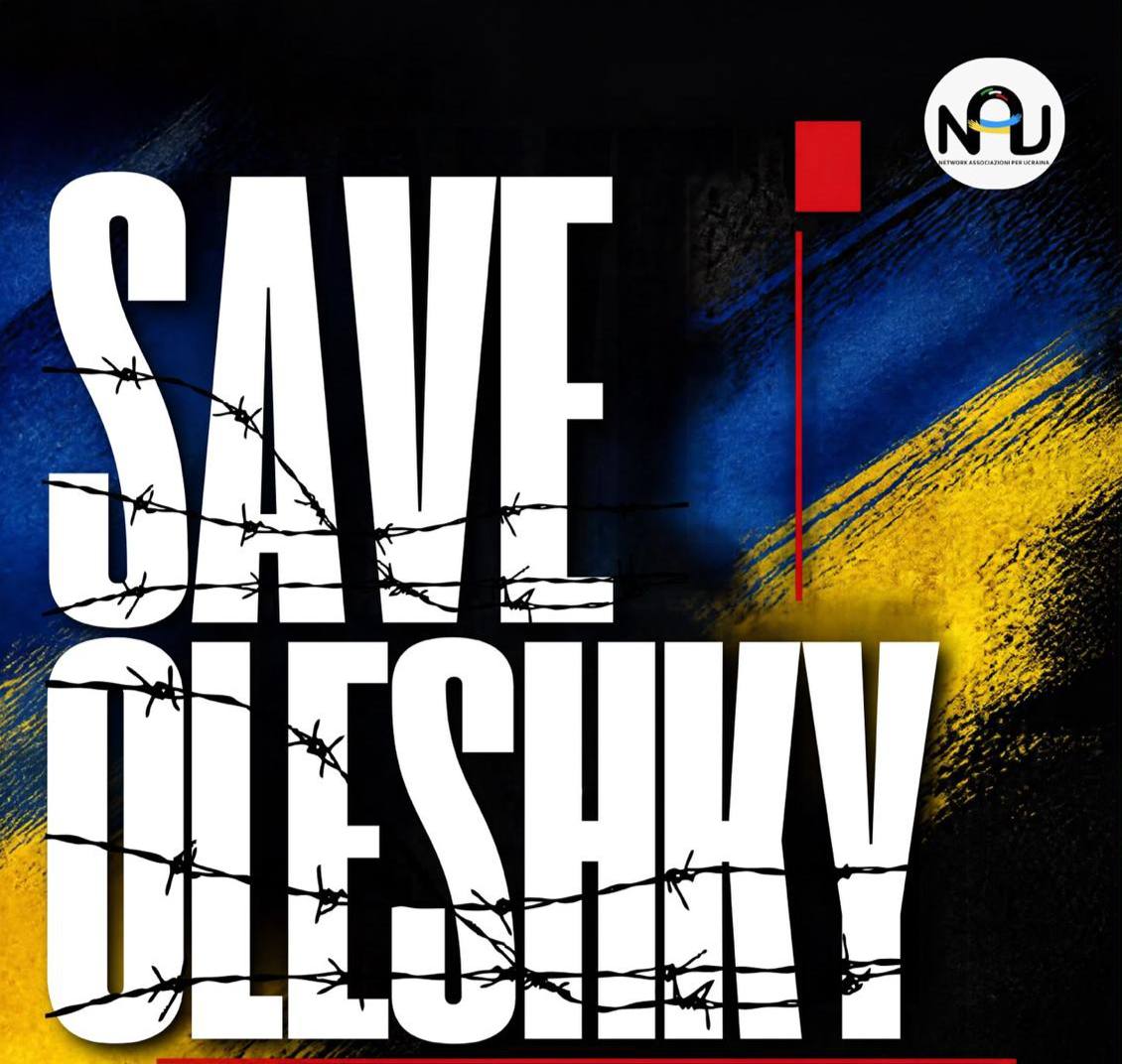
In various Italian cities, activists will take to the streets in support of the residents of Oleshky
In Rimini, Piacenza, Ancona, Modena and other cities, solidarity initiatives are taking place in support of the residents of the occupied town of Oleshky in the Kherson region. Ukrainian communities and civil society organisations in Italy are joining forces to draw attention to the humanitarian disaster and remind the international community of the plight of the town’s civilian population. The initiative, supported by NAU — a network of Ukrainian associations in Italy — aims to break the media silence surrounding the tragedy in Oleshky and urge society not to stand idly by. One of the events is being organised by the Mriya ODV association, with the support of local Ukrainian civil society organisations Leleka ODV and Magica Pysanka. On 10 October at 5.00 pm in Modena, in Piazza Muratori, a public gathering will take place under the slogan ‘Insieme per Oleshky: in piazza contro l’indifferenza’ — ‘Together for Oleshky: in the square against indifference’. “In Oleshky, people are using their last reserves of strength to survive in the darkness and abandonment,” emphasises Olena Kim, president of the Mriya ODV association. She draws parallels between the current situation in the town and the Holodomor of 1932–1933, highlighting the danger of the population’s isolation and the indifference of the international community. Rimini, Piacenza and Ancona are also joining the initiative. In various cities, Ukrainians are striving to make the voices of the residents of occupied Oleshky heard and to draw the attention of Italian society to the situation in the temporarily occupied territory of Ukraine. In Piacenza, support for the appeal was expressed by municipal councillor Claudia Gnocchi (Gruppo Misto) and the CISL trade union, which presented the appeal to the city council and called on politicians to respond to the situation. The organisers are calling on residents of Italian cities, representatives of civil society organisations, political and social groups, as well as journalists, to join the initiatives in support of Oleshky.
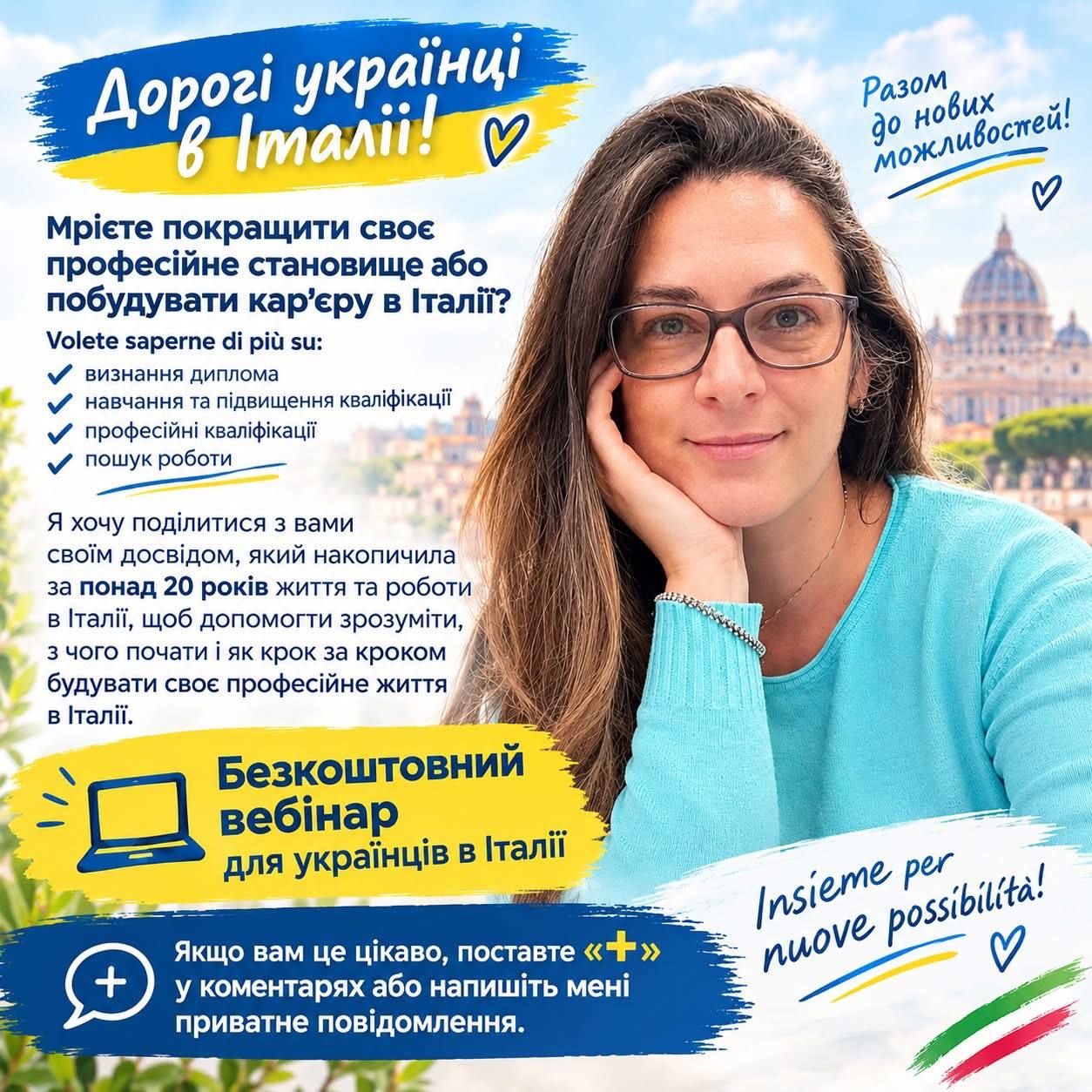
Як побудувати професійну кар’єру в Італії: безкоштовний вебінар для українців
Українців запрошують на безкоштовний вебінар із професійної орієнтації, під час якого можна буде дізнатися більше про можливості професійного розвитку та працевлаштування в Італії. Спікерка поділиться власним досвідом, накопиченим за понад 20 років життя та роботи в Італії. Вона має університетську освіту, здобуту в Україні, продовжила навчання в Італії, пройшла професійну післядипломну підготовку та працювала з фахівцем із професійної орієнтації та працевлаштування. Сьогодні вона працює в італійській компанії на посаді керівниці відділу маркетингу. Під час вебінару поговоримо про: 🔹 визнання українського диплома в Італії; 🔹 навчання та підвищення кваліфікації; 🔹 професійні кваліфікації; 🔹 пошук роботи; 🔹 можливості професійного розвитку та побудови кар’єри в Італії; 🔹 відповіді на запитання учасників. 📅 15 жовтня ⏰ 18:00 💻 Онлайн Участь безкоштовна
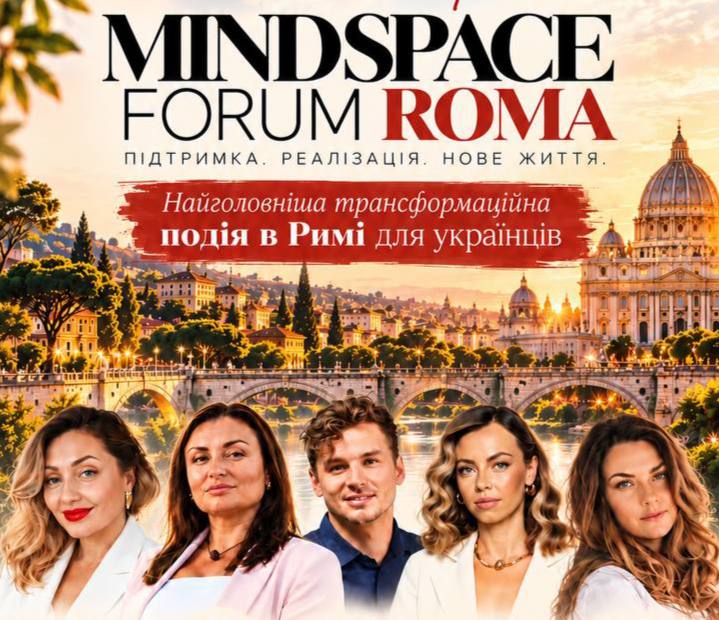
Renowned coaches and experts: the speakers for the MindSpace FORUM in Rome have been announced
🫶🌸 On 1 November 2026, Rome will host the MIND SPACE FORUM — a conference on psychological wellbeing, self-fulfilment, health and inner strength. The event is organised by CRASA APS, an association founded by women to support socio-cultural projects. The organisers are offering participants a space where they can take a break from their daily routines, rethink their own goals, gain new insights and discover practical tools for change. The forum’s programme features talks by experts and real-life stories, psychological practices and specific tools for restoring balance and inner strength. Experts will speak on psychology, health, self-fulfilment, the media and spiritual development, whilst participants will be able to gain new insights and practical advice that can be applied in everyday life. The organisers’ vision is for the forum to be more than just a one-day event; it is intended to be an opportunity to find one’s own footing, gain inspiration and identify specific steps towards change. Speakers at the forum include experts in the fields of psychology, health, self-fulfilment, media and spiritual development: Tetyana Tyshchenko — a professional psychologist, coach and creator of the ‘DNA of Authenticity’ method. Anastasia Kozyr – a biochemist, nutritionist and lifestyle coach. Presentation topic: ‘My body is a temple. Simple daily actions that provide energy and resources’. Mila Bharat — spiritual mentor and sound therapist with a medical background. Talk title: ‘Tuning into change: how sound and vibrations affect the body, emotions and inner state’. Kseniia Borchuk — marketer, programmer, blog development expert, founder of a start-up agency. Talk topic: ‘To go public or not? How to overcome your fear of social media and work out whether you need a personal blog’. Mykhailo Vovchyk — social activist, journalist, media manager, founder of AFISHA.IT and UKRAINIANS.IT. Talk topic: ‘How to turn a forced move into new opportunities?’. ✅The experts will share practical tools, their own experiences and methods that can be applied in everyday life. 📍So, see you in Rome on 1 November! ✍️For more information, visit https://mindspace-forum.crasa.team/
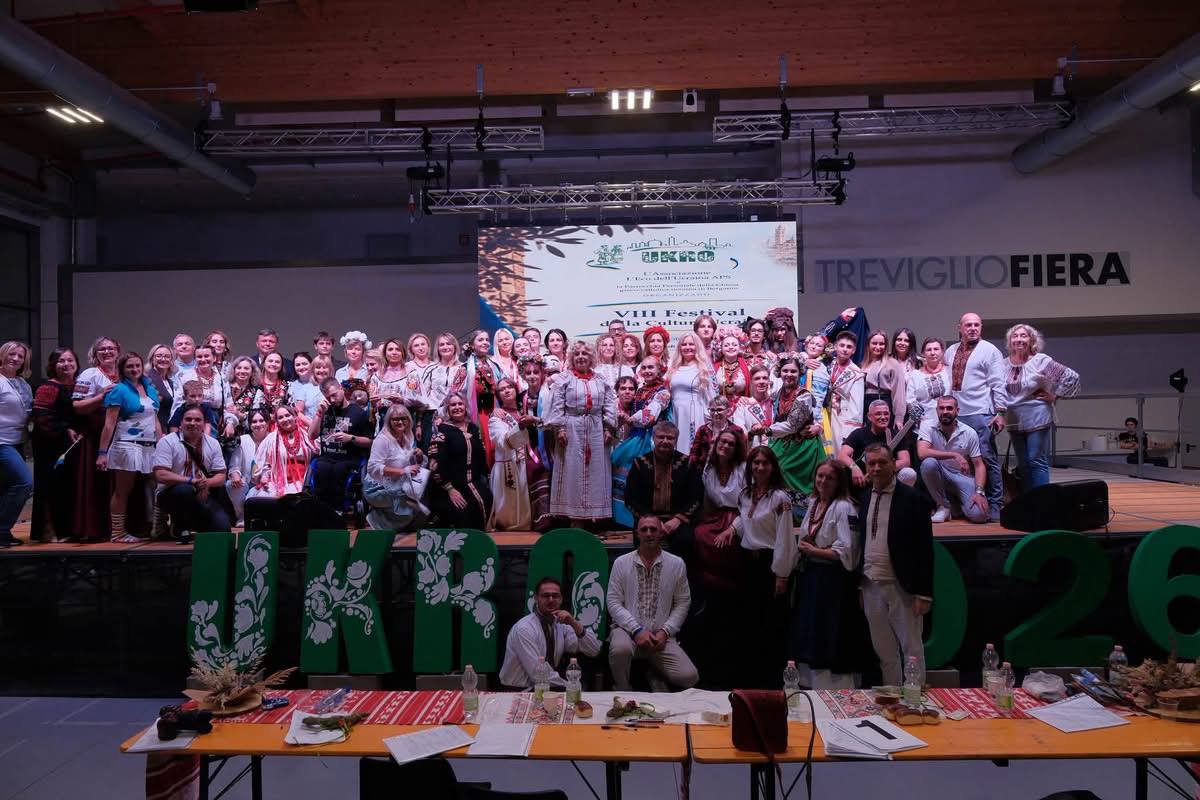
A group from Naples won the UKRO-2026 festival
The 8th UKRO Ukrainian Culture Festival took place in Bergamo 🇺🇦 This year, 16 teams from various cities across Italy — from north to south — took part in the competition. The winner was determined by the scores of a professional jury and a public vote. The jury comprised well-known figures from Ukrainian culture: Honoured Artist of Ukraine Dmytro Khoma, actress Olena Kadobna, Ukrainian beatbox champion Oleksandr Melnyk, author of books on Ukrainian embroidery traditions Vira Chipurko, Olena Hromyk, director of a dance troupe from Milan, and Lesya Korolyk-Boiko, a cultural and community figure. The winner’s cup was awarded to the troupe from Naples — the Dateci Le Ali (‘Give Us Wings’) association! “The best festival since 2018. The participants’ performances were absolutely brilliant… but the performance by the team from Naples was something incredible; the emotions were overwhelming. Their victory is 100 per cent deserved,” – these are the comments left by spectators on the festival’s Facebook page. According to the festival rules, the winners are entitled to host the next competition in their city. So we have some wonderful news: UKRO 2027 will take place in Naples! This is a historic event, as it is the first time in the history of UKRO that the cup has been won by a group from southern Italy. Ukrainian culture is uniting Italy — from Bergamo to Naples!
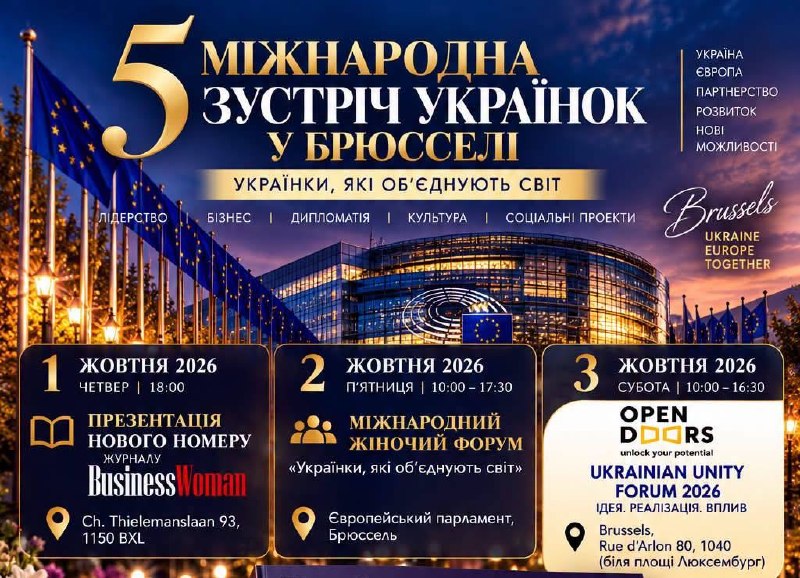
‘Ukrainian women are bringing the world together’: the latest issue of Business Woman magazine is being launched in Brussels
A presentation of the new issue of *Business Woman* will take place in Brussels: the 5th International Meeting of Ukrainian Women gets underway On 1 October 2026, a presentation of the new issue of *Business Woman* magazine will take place in Brussels as part of the fifth International Meeting of Ukrainian Women in Brussels. This year’s meeting is being held under the slogan ‘Ukrainian Women Uniting the World’ and will bring together representatives of the Ukrainian community, business, diplomacy, culture and social projects. The presentation will be the first event of the three-day international gathering, which will run from 1 to 3 October. The highlight on 2 October will be the International Women’s Forum ‘Ukrainian Women Uniting the World’, to be held at the European Parliament. On 3 October, the programme will continue with Open Doors / Ukrainian Unity Forum 2026 under the slogan ‘Idea. Implementation. Impact’. The latest issue of Business Woman is dedicated to the stories of Ukrainian women, international cooperation, diplomacy, business and the role of Ukrainian women’s leadership in the world. The cover features participants in the third International Meeting of the Global Ukrainian Community, ‘United in the World – Strong for Ukraine’. The organisers emphasise the importance of creating a space for new partnerships, ideas and opportunities that bring Ukrainian women in different countries together. “Ukrainians today live in dozens of countries around the world. But our true strength begins when we know one another and can pool our knowledge, experience, contacts and opportunities, and communicate in person,” said Anna Krysiuk, a Ukrainian entrepreneur, social activist and founder of the international glossy magazine *Business Woman*, President of the Business Woman Club (Ukraine), Anna Krysiuk. The event organisers are the Global Ukrainian Community, the Business Woman Club and *Business Woman* magazine. Anna Krysiuk adds that, over the years of international work on the club’s projects, a large network of people from over 50 countries has formed: entrepreneurs, diplomats, experts, representatives of the public sector, education and culture, heads of organisations and international partners. And the forum’s main objective is to transform these connections and experiences into real opportunities for people and for Ukraine. 📅 1 October, Thursday 🕕 18:00 📍 Ch. Thielemanslaan 93, 1150 BXL Three days in Brussels — three formats for international dialogue: a presentation, a women’s forum and a platform for putting ideas into practice.
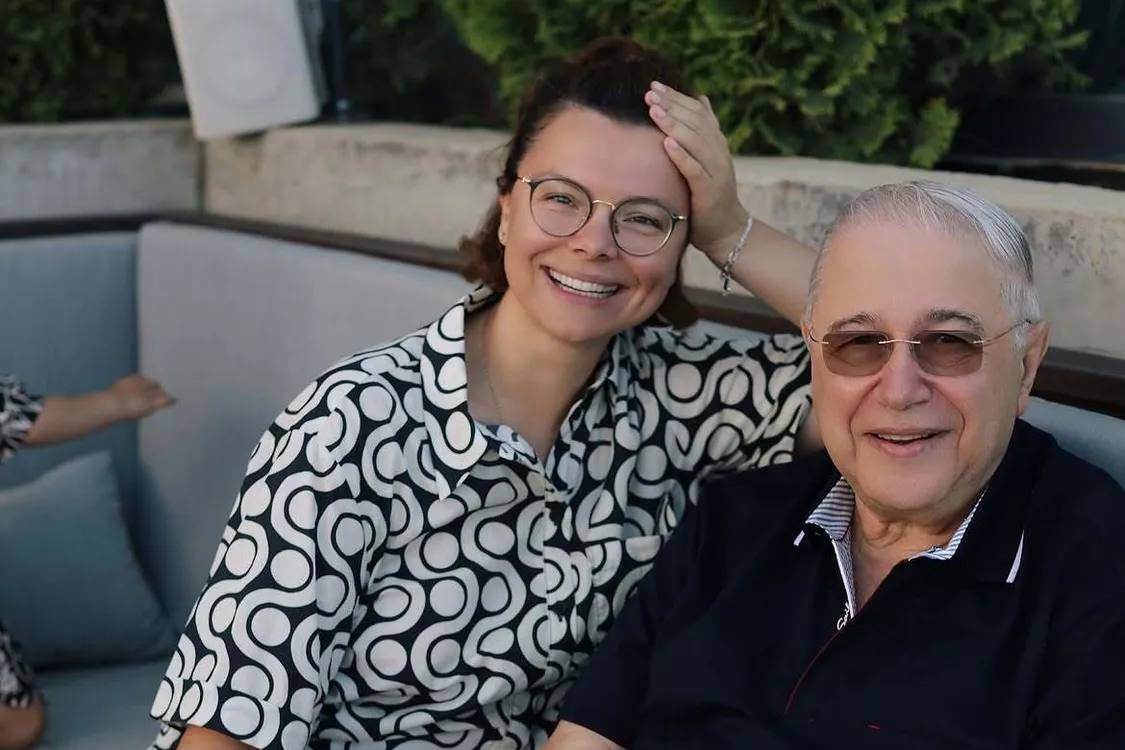
The wife of pro-Putin figure Petrosyan was refused a visa to Italy because of her support for the war in Ukraine
Tetyana Brukhunova, 37, the fifth wife of Russian comedian Yevgeny Petrosyan, has been refused an Italian visa. According to her, this is the first time this has happened in 13 years of travelling around Europe. Brukhunova had planned to travel to Milan for Fashion Week, but instead of a visa, she was handed back her blank passport with no explanation as to why her application had been refused. “I was, of course, very upset. No reasons given, no explanations. They simply returned my passport blank,” she complained on social media. Bruhunova later stated that she believes the refusal is linked to her name being listed on the Ukrainian “Myrotvorets” database. On the centre’s website, she is accused, among other things, of propagating Russia’s war against Ukraine, supporting Russian aggression and glorifying Russian military personnel. Bruhunova herself makes no secret of her support for Russia and stated that being included in the ‘Mirotvorets’ database does not frighten her. “99.9 per cent of well-known people in Russia, the country’s patriots, are on that list. So I can confidently say that I am proud of this,” she said. According to Brukhunova, she now supposedly understands why she was refused an Italian visa. At the same time, she assured that she is not upset about it and plans to travel to other countries. However, the mere fact that a person is listed in the ‘Myrotvorets’ database does not automatically constitute legal grounds for refusing a Schengen visa: the final decision on whether to grant a visa is taken by the consular authorities in accordance with the applicable rules and the results of the applicant’s vetting.
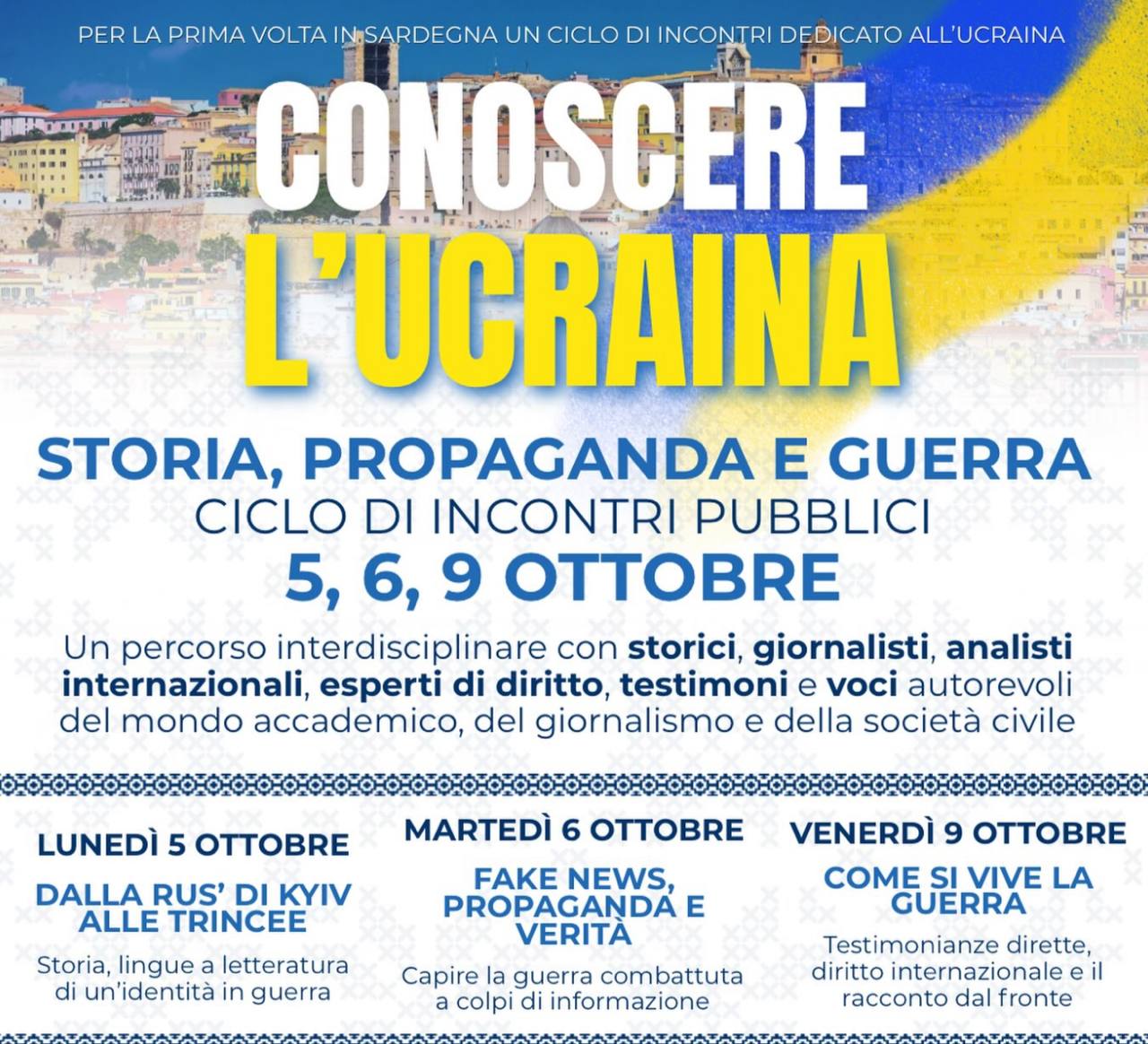
A series of talks on the history, propaganda and war in Ukraine is to be held in Sardinia
A series of public talks entitled ‘Conoscere l’Ucraina. Storia, propaganda e guerra’, dedicated to the history of Ukraine, information warfare and life in the country during a full-scale war, will take place in Cagliari for the first time in Sardinia. Three sessions will take place on 5, 6 and 9 October at the Fondazione Sardegna, Via S. Salvatore Da Horta, 2. They will begin at 5.00 pm and end at 7.30 pm. Admission is free, but the organisers recommend booking in advance. 5 October — ‘From Kievan Rus’ to the Trenches’ The session will explore history, language and literature as components of Ukrainian identity in the context of war. 6 October — ‘Fake News, Propaganda and the Truth’ Participants will discuss how information and propaganda have become part of modern warfare. 9 October — ‘Life During Wartime’ The programme will feature first-hand accounts, international law and stories from the front line. Historians, journalists, international analysts, legal experts, eyewitnesses and representatives from academia and civil society have been invited to take part. The organisers will announce the names of participants gradually in the run-up to each event. The series is organised by Associazione OCI – ODV and Liberi Oltre le Illusioni. The event is supported by the Municipality of Cagliari and the Region of Sardinia, as well as receiving financial backing from the Fondazione di Sardegna. The organisers note that the aim of the project is to present Ukraine through its own history, culture and contemporary experiences, rather than solely through a Soviet lens.
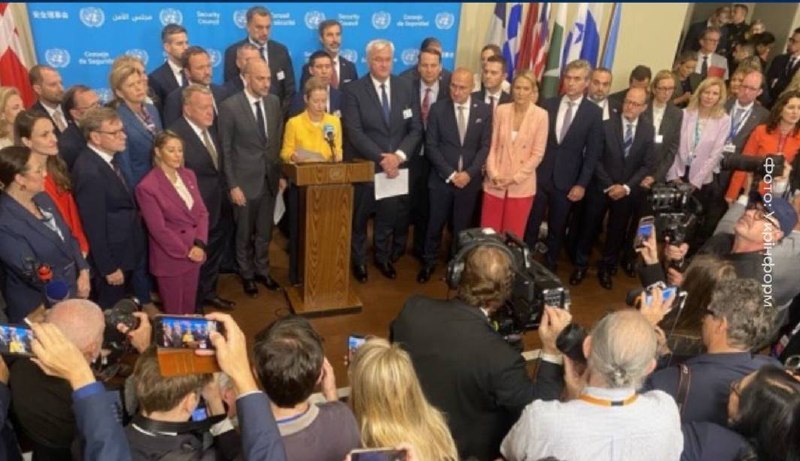
More than 50 UN member states have called on Russia to end its aggression against Ukraine
More than 50 countries have called on Russia to agree to an immediate and unconditional ceasefire and to take a step towards substantive peace talks. The joint statement was issued ahead of a meeting of the UN Security Council by the EU High Representative for Foreign Affairs and Security Policy, Kaja Kallas, and the Ukrainian Minister for Foreign Affairs, Andriy Sibiga. In the document, the countries reaffirmed their solidarity with Ukraine and emphasised the need to uphold the UN Charter, in particular the principles of sovereignty, independence and territorial integrity of states, as well as Ukraine’s right to self-defence. Separately, the signatories expressed deep concern at the intensification of Russian attacks on the civilian population and critical infrastructure in Ukraine. The document emphasises the need to respect international humanitarian law, protect civilians and hold those responsible to account. The countries also drew attention to the situation in the Black Sea. They expressed concern over Russian attacks, which are hindering Ukrainian grain exports and posing risks to global food security. The states supported efforts to reach agreements that would guarantee freedom of navigation in the Black Sea. The authors of the statement recalled that Ukraine had agreed to a full, immediate and unconditional ceasefire as far back as March 2025. “We call on Russia to finally do the same as a necessary step towards meaningful diplomacy and negotiations leading to peace,” the document states. A separate paragraph concerns Ukrainians who have been unlawfully detained and deported. The countries called on Russia to immediately and unconditionally return all unlawfully detained, forcibly displaced and deported civilians, including children, and to ensure the return of prisoners of war and internees. “Ukraine wants peace. We want peace. Russia must cease its aggression, agree to a ceasefire and engage meaningfully in negotiations for a comprehensive, just and lasting peace in accordance with international law,” the joint statement emphasises. The document was signed by more than 50 states, including most European countries, as well as Australia, Canada, Costa Rica, Honduras, Israel, Japan, New Zealand, Panama and South Korea. The statement was released on the eve of a UN Security Council meeting on the topic of ‘Maintaining peace and security in Ukraine’, which Ukraine’s Minister for Foreign Affairs, Andriy Sybiga, is due to attend.