Our Blog
Useful articles and news
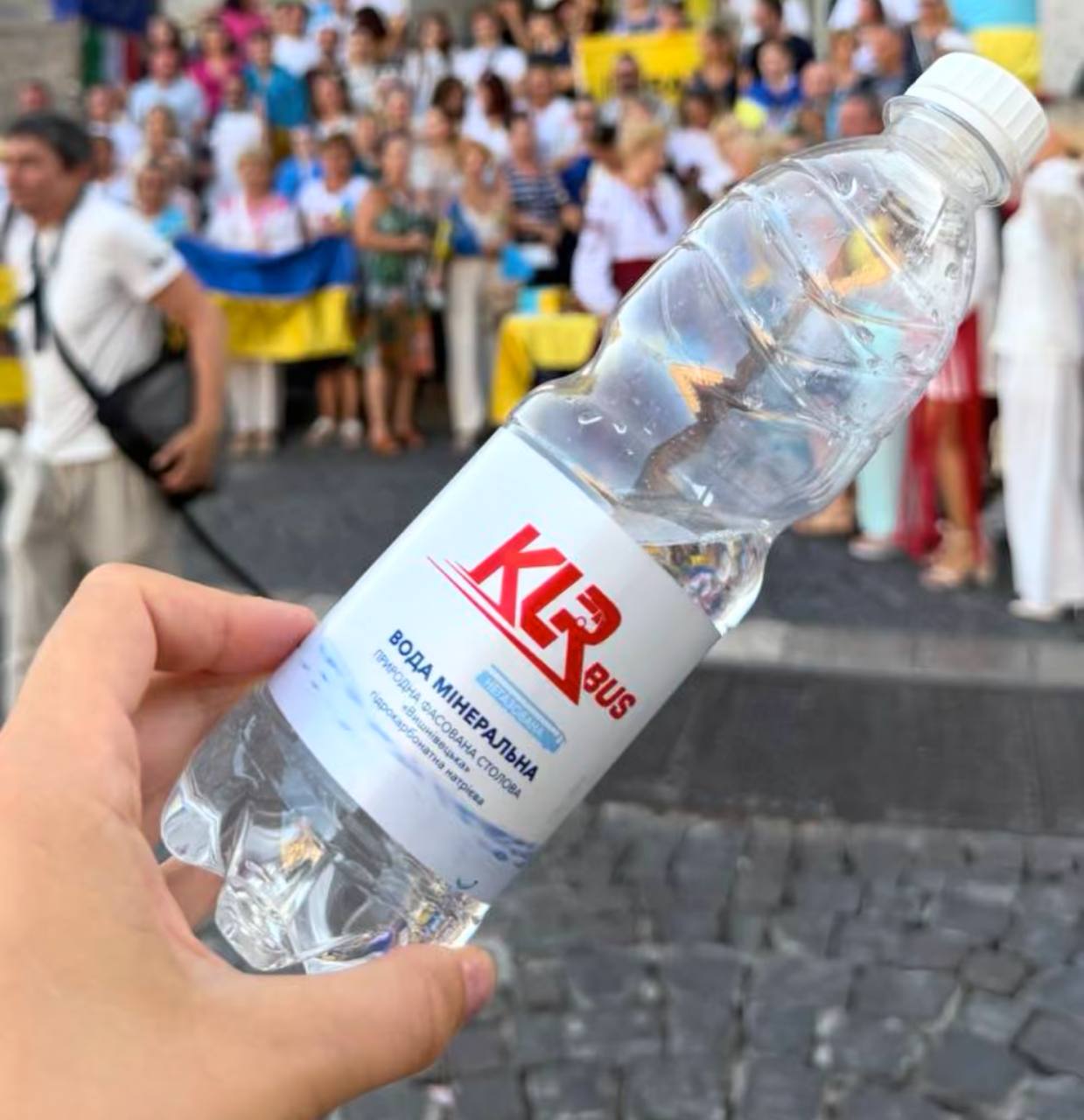
KLR supported a rally in Naples to mark Ukraine’s Independence Day
The Ukrainian transport company KLR has partnered with a rally in Naples marking the 35th anniversary of Ukraine’s independence. The company provided all participants with drinking water, demonstrating its support for the Ukrainian community and important patriotic initiatives abroad. Thank you to KLR for supporting Ukraine, Ukrainians and events that unite our community around freedom, independence and love for our homeland! Note from UA Service Hub: KLR is a Ukrainian transport company specialising in passenger coach services, including international routes between Ukraine and European countries. In June 2026, the company began operating services to Ukraine from Italy. A premium-comfort coach departs from Naples every Wednesday and Sunday.
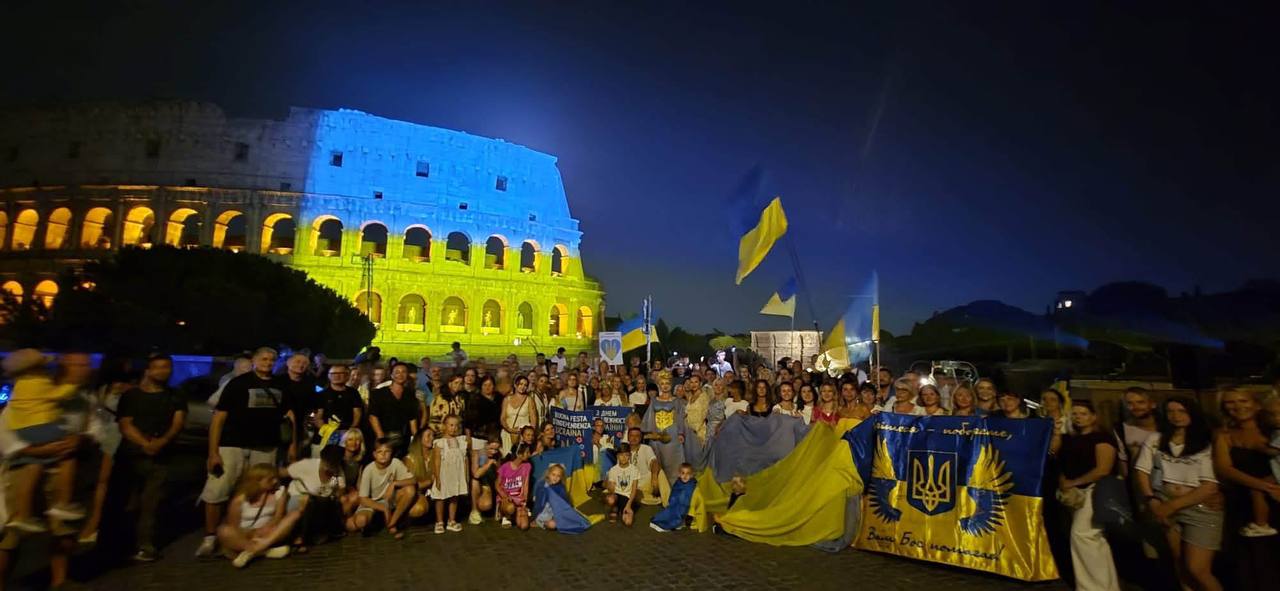
The Colosseum in Rome was lit up in blue and yellow in honour of Ukraine’s Independence Day
Rome, 24 August 2026. On Ukraine’s Independence Day, the Colosseum — one of Italy’s most famous landmarks — was illuminated in blue and yellow. In this way, Rome joined in the celebrations marking the 35th anniversary of Ukraine’s independence and demonstrated its solidarity with the Ukrainian people. 🇺🇦💙💛 A rally was held near the Colosseum attended by Ukrainian activists, community representatives and friends of Ukraine. The event was attended by Ihor Brusilo, Ukraine’s Ambassador Extraordinary and Plenipotentiary to Italy, who addressed those present and expressed his support for the Ukrainian community. A group of Ukrainian activists from Naples, led by Tetyana Onyskiv, President of the Dateci Le Ali association, travelled to Rome especially for the occasion. For the participants, this trip was not merely an opportunity to take part in an official event, but a symbol of the unity of Ukrainians who, whilst far from their homeland, continue to support Ukraine and remind the world of its struggle for freedom. Against the backdrop of the blue-and-yellow Colosseum, the Ukrainians raised their national flags, sang the Ukrainian national anthem, paid tribute to the fallen heroes and took part in a fundraising drive for the Ukrainian Armed Forces. The Christian Association of Ukrainians in Italy (Associazione Cristiana degli Ucraini in Italia) and Ukrainian activists helped to organise and coordinate the event. The organisers expressed special thanks to Oles Horodetskyi for organising and coordinating the event, as well as to the Embassy of Ukraine in Italy and Ambassador Ihor Brusyl for their initiative and support of the Ukrainian community. “For me, as president of the Dateci Le Ali association, this was a special day. A day of unity, remembrance and resilience. We came from Naples not just for the event – we came to show that Ukraine is united, wherever we live, and that our struggle for freedom continues,” said Tetyana Onyskiv. The participation of the Neapolitan delegation served as yet another reminder: Ukrainians in Italy remain a united community, regardless of where they live.
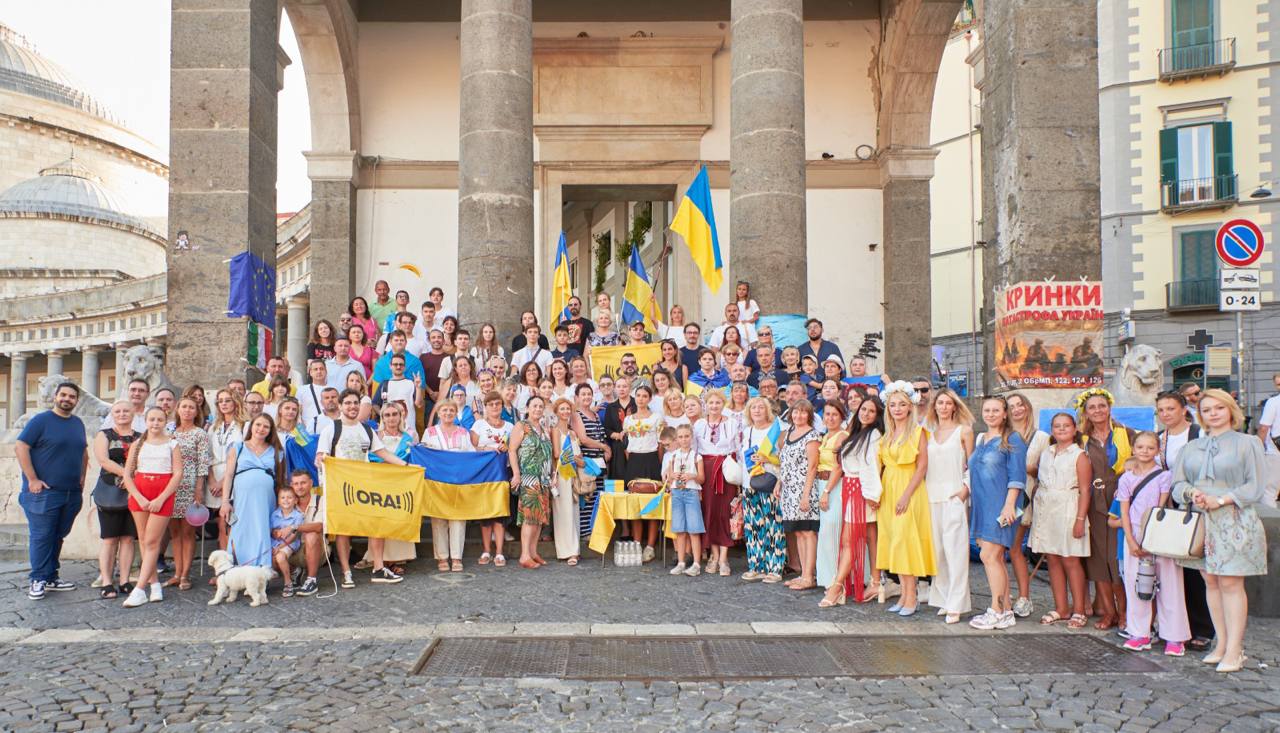
Ukraine’s Independence Day was celebrated in Naples – with a traditional loaf of bread and a large flag
Naples marked the 35th anniversary of Ukraine’s independence: culture, solidarity and traditions in Plebiscite Square, Naples, 23 August 2026 — Plebiscite Square was transformed into a vast space of solidarity and support for Ukraine to mark the 35th anniversary of the restoration of Ukraine’s independence. The initiative, organised by CRASA APS – Comunità dei Rifugiati: Attività, Sviluppo, Arte, brought together the Ukrainian community in Naples, representatives of public institutions, Italian civil society and numerous local residents. One of the most moving moments of the day was the unfurling of a huge Ukrainian flag, which bathed Plebiscito Square in blue and yellow. It was a symbolic gesture dedicated to the freedom, unity and resilience of the Ukrainian people. The event was accompanied by a prayer for Ukraine and peace, Ukrainian patriotic songs and a photo exhibition showcasing Ukrainian identity, culture and the realities of modern-day Ukraine. Larysa Polishchuk, Consul-General of Ukraine in Naples, addressed those present with a welcoming speech, emphasising the importance of preserving the memory of Ukraine’s independence and freedom. Speeches were also given by representatives of the Ukrainian community and representatives of the political groups ORA!, Liberaldemocratico, Radicali Italiani and Spazio Pubblico, as well as the association Liberi Oltre le Illusioni. The evening was complemented by musical performances that accompanied the festive programme. Singer Yamarina and violinist Olga Orekhova performed for the audience, evoking special emotions through Ukrainian music. A particularly memorable moment was the segment dedicated to Ukrainian fashion and culture. Ukrainian designer Viktoria Fenix created a dress inspired by Ukraine especially for this event, transforming national symbols into a true work of art through its intricate details. The event concluded with a traditional korovai. The large festive loaf was shared amongst the participants as a gesture of friendship and hospitality. “Modern Ukraine is celebrating its 35th anniversary.” And this is one of the most difficult years in its history. Ukraine is under attack every day and is being torn apart by the actions of external and internal enemies. We are far from our homeland, but our support is incredibly important. That is precisely why we are grateful to everyone who was with us on this important day,” said Zhanna Zhukova, president of the CRASA APS association. 23 August was not only a day of celebration but also an important occasion for the Ukrainian community to engage with the city of Naples — an opportunity to reaffirm the value of independence, preserve Ukrainian culture and once again express our desire for peace. Organiser: CRASA APS – Comunità dei Rifugiati: Attività, Sviluppo, Arte.
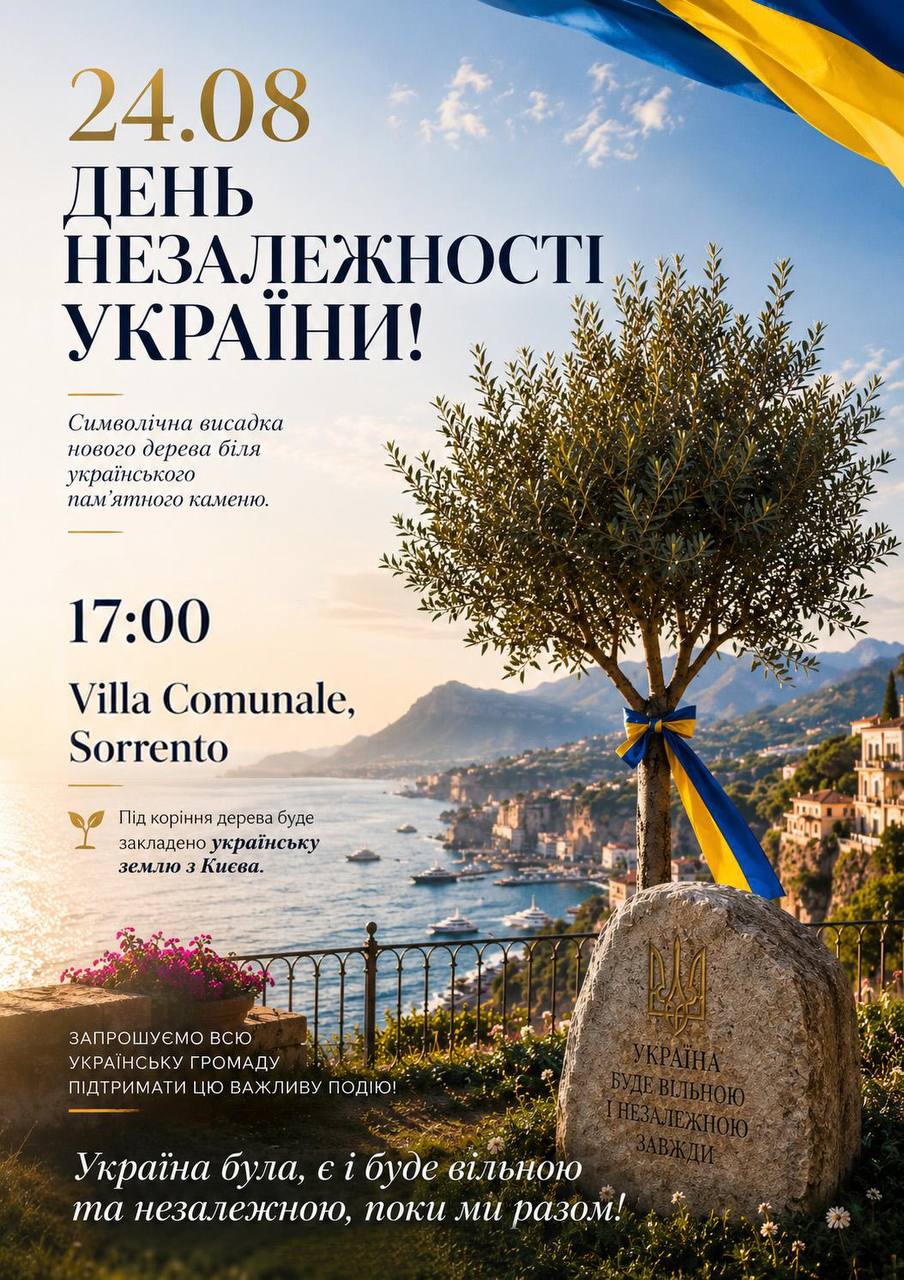
A tree containing Ukrainian soil will be planted in Sorrento on Ukraine’s Independence Day
On 24 August at 5.00 pm, a symbolic event to mark Ukraine’s Independence Day will take place at the Villa Comunale in Sorrento. This year, the Municipality of Sorrento (Comune di Sorrento) will plant a new tree near the memorial stone erected in support of Ukraine. The event will take on special symbolic significance thanks to Ukrainian soil brought from Kyiv. It will be placed beneath the tree’s roots — as a symbol of the unbreakable bond between Ukrainians and their homeland, even far beyond Ukraine’s borders. The organisers invite the Ukrainian community in Sorrento and all friends of Ukraine to join the event and celebrate Independence Day together. 📅 24 August 🕔 17:00 📍 Villa Comunale, Sorrento The new tree will become a symbol of life, remembrance and hope — and a reminder of Ukraine, which has been, is and will remain free and independent. 🇺🇦
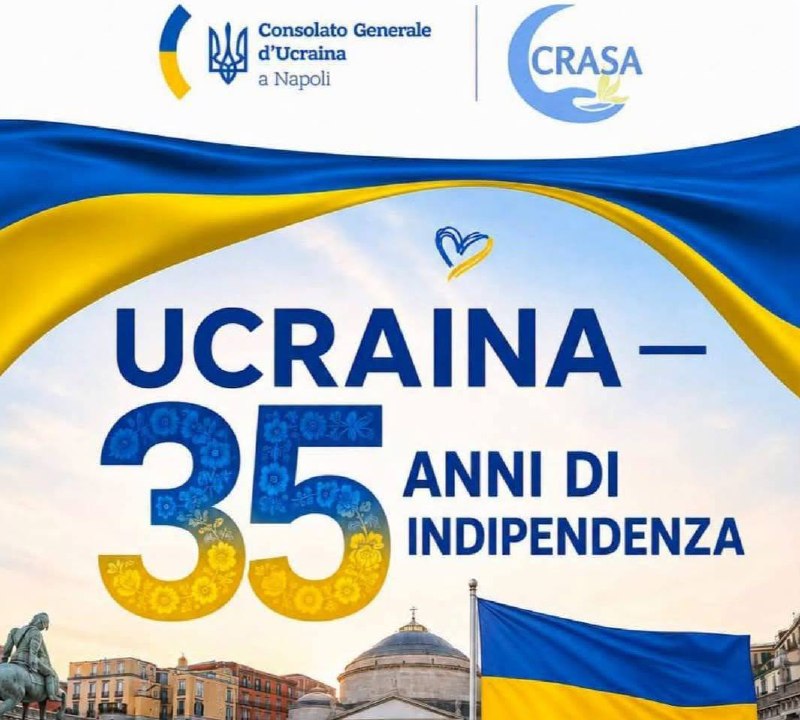
35 years of Ukrainian independence: Ukrainians across Italy are organising celebrations
On 24 August, Ukraine will mark the 35th anniversary of its independence. This year, Ukrainian communities in various cities across Italy have organised dozens of events to mark this important day. People are coming together to share stories about Ukraine and preserve Ukrainian culture far from home. 📍 Naples — a festive celebration in Piazza del Plebiscito. 📍 Rome — the ‘Roma con l’Ucraina’ march and an event to mark the 35th anniversary of independence. 📍 Trento — a cultural programme dedicated to Ukraine and its history. 📍 Treviso — celebrations under the slogan ‘Free! Strong! Independent!’. 📍 Bergamo — ‘Corteo in auto per l’Ucraina’ — a motorcade in support of Ukraine. 📍 Other cities will also host concerts, exhibitions, cultural gatherings, charity events and commemorative events. This year, Ukrainians in Italy will once again come together to show that independence is not just a date on the calendar. It is our history, our culture, our freedom and Ukraine’s right to be free. Wherever we may be, we remain part of Ukraine.
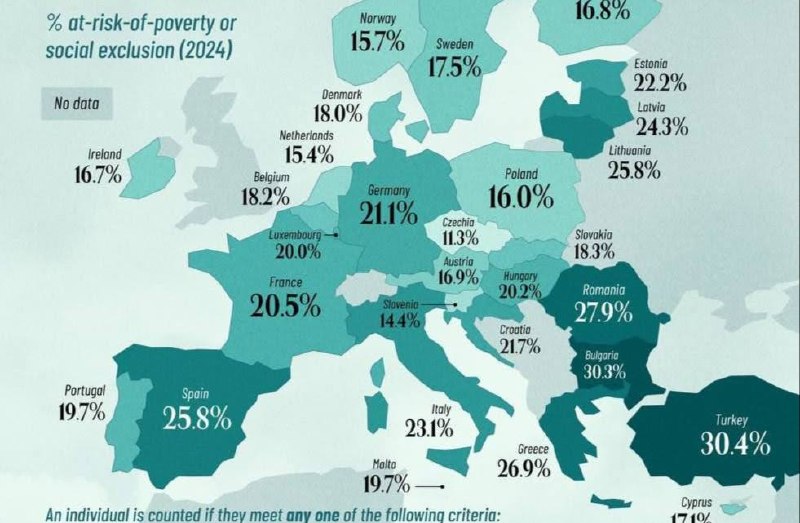
In which European countries are the most people at risk of poverty?
Europe is not just about high wages and social security. In some countries, a significant proportion of the population faces low incomes, inequality and the risk of social exclusion. 📊 Top 10 European countries by the proportion of the population at risk of poverty or social exclusion: 🇹🇷 Turkey – 30.4% 🇧🇬 Bulgaria — 30.3% 🇷🇴 Romania — 27.9% 🇬🇷 Greece — 26.9% 🇪🇸 Spain — 25.8% 🇱🇹 Lithuania — 25.8% 🇱🇻 Latvia — 24.3% 🇮🇹 Italy — 23.1% 🇪🇪 Estonia — 22.2% 🇭🇷 Croatia — 21.7% On average across the European Union, 21 per cent of the population — around 93.3 million people — were at risk of poverty or social exclusion. (European Commission) 📉 Lowest rates in the EU: 🇨🇿 Czech Republic — 11.3% 🇸🇮 Slovenia — 14.4% 🇳🇱 The Netherlands — 15.4% 🇵🇱 Poland — 16.0% 🇮🇪 Ireland — 16.7% 🇫🇮 Finland — 16.8% 🇦🇹 Austria — 16.9% 🇨🇾 Cyprus — 17.1% 🇸🇪 Sweden — 17.5% 🇮🇹 Italy — 23.1% Consequently, approximately one in four people in Italy were at risk of poverty or social exclusion. However, the situation varies greatly from region to region: for example, in Calabria, this figure stood at 37.2% in 2024 — one of the highest rates among EU regions. (European Commission) 🇺🇦 And what about Ukraine? Ukraine is not included in the Eurostat rankings as it is not an EU member state. According to World Bank estimates, the poverty rate in Ukraine last year stood at around 37 per cent, which is significantly higher than pre-war levels. In 2021, the figure was estimated at around 20 per cent. (The World Bank) ⚠️ Important: the ‘risk of poverty or social exclusion’ indicator is not simply the number of people with an income below a certain threshold. It takes into account several criteria, including low income, severe material and social hardship, or very low labour intensity. 💶 WHAT SHOULD THE MINIMUM INCOME BE IN EUROPE? This figure is often referred to as the ‘subsistence minimum’, but officially Eurostat uses the term ‘at-risk-of-poverty threshold’. It is equal to 60 per cent of the median income in a given country. In other words, a person whose income is below this level is statistically considered to be at risk of poverty. 📊 At-risk-of-poverty threshold for a single person, € per month: 🇱🇺 Luxembourg — €2,540 🇩🇰 Denmark — over €1,600 🇦🇹 Austria — over €1,500 🇮🇪 Ireland — over €1,500 🇳🇱 Netherlands — over €1,400 🇧🇪 Belgium — over €1,300 🇩🇪 Germany — €1,381 🇫🇷 France — €1,278 🇮🇹 Italy — €1,030 🇪🇸 Spain — €965 🇵🇱 Poland — around €700 🇵🇹 Portugal — less than €750 🇬🇷 Greece — less than €750 🇭🇷 Croatia — less than €750 🇱🇹 Lithuania — less than €750 🇸🇰 Slovakia — less than €750 🇭🇺 Hungary — less than €500 🇷🇴 Romania — less than €500 🇧🇬 Bulgaria — €391 🇪🇺 EU average — around €1,079 per month. ⚠️ But it’s important to note: this doesn’t mean that €1,079 is enough for a comfortable life. The figure reflects the relative level of income within a country and does not take into account the actual cost of rent, food, transport and other expenses. For example, the threshold in Italy is around €1,030, but in Milan, Rome or Naples, housing costs can account for a significant proportion of this amount.
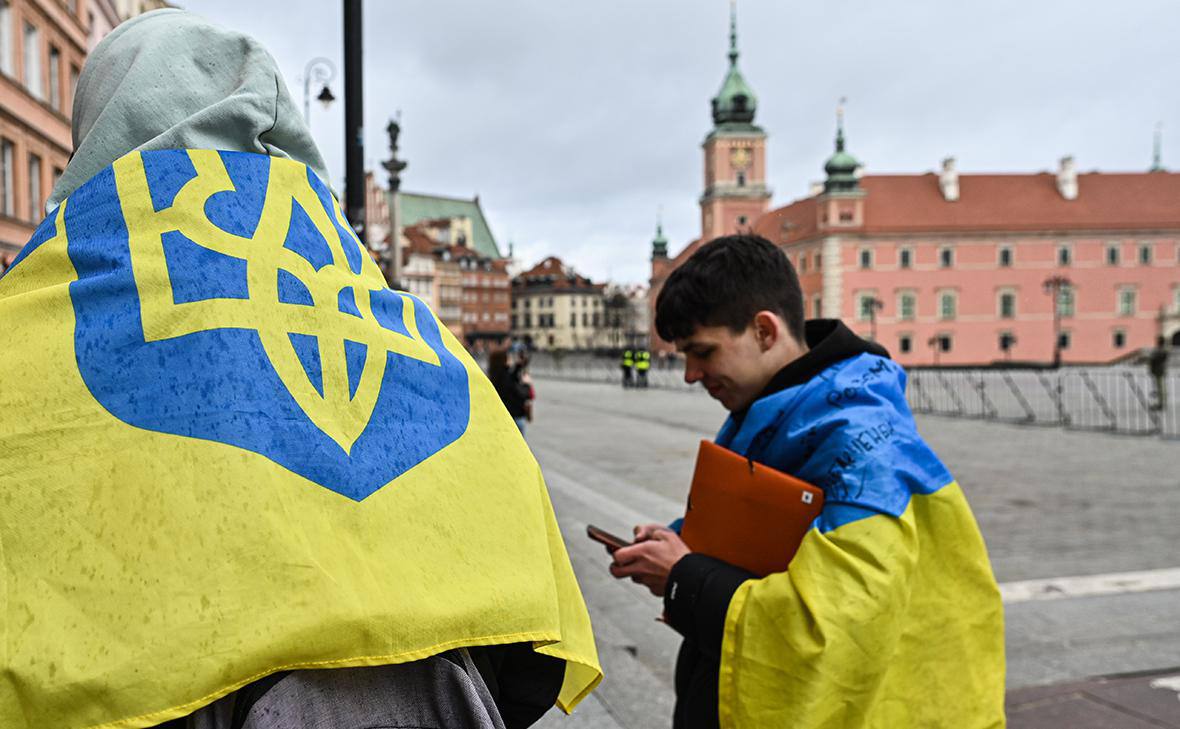
There are calls in Poland to deport Ukrainians who are not in employment
In Poland, debate is gathering momentum over the idea of deporting Ukrainian men of conscription age who do not have legal employment from the country. The initiative was put forward by representatives of the opposition party Prawo i Sprawiedliwość (PiS). At present, this is a political proposal rather than an existing law or a decision on mass deportation. PiS MP Andrzej Szlówka stated that the Polish authorities should identify people who are in Poland illegally or do not have official employment, and set a deadline for them to return to Ukraine. “Even if it’s 5 per cent, that’s at least a brigade, or even a division, of people who can be organised and who can fight for their country,” said Śliwka. According to him, such measures are also necessary for Poland’s security. However, according to UA Service HUB, there is currently no confirmation that the Polish authorities have decided on the mass deportation of Ukrainian men. This refers specifically to a political initiative and statements made by a PiS representative. At the same time, against the backdrop of this debate, the Ukrainian community in Poland is increasingly drawing attention to incidents of aggression and attacks on Ukrainians. Anti-Ukrainian sentiment is growing within Polish society, and certain political statements are only serving to intensify the debate surrounding the presence of Ukrainians in the country.
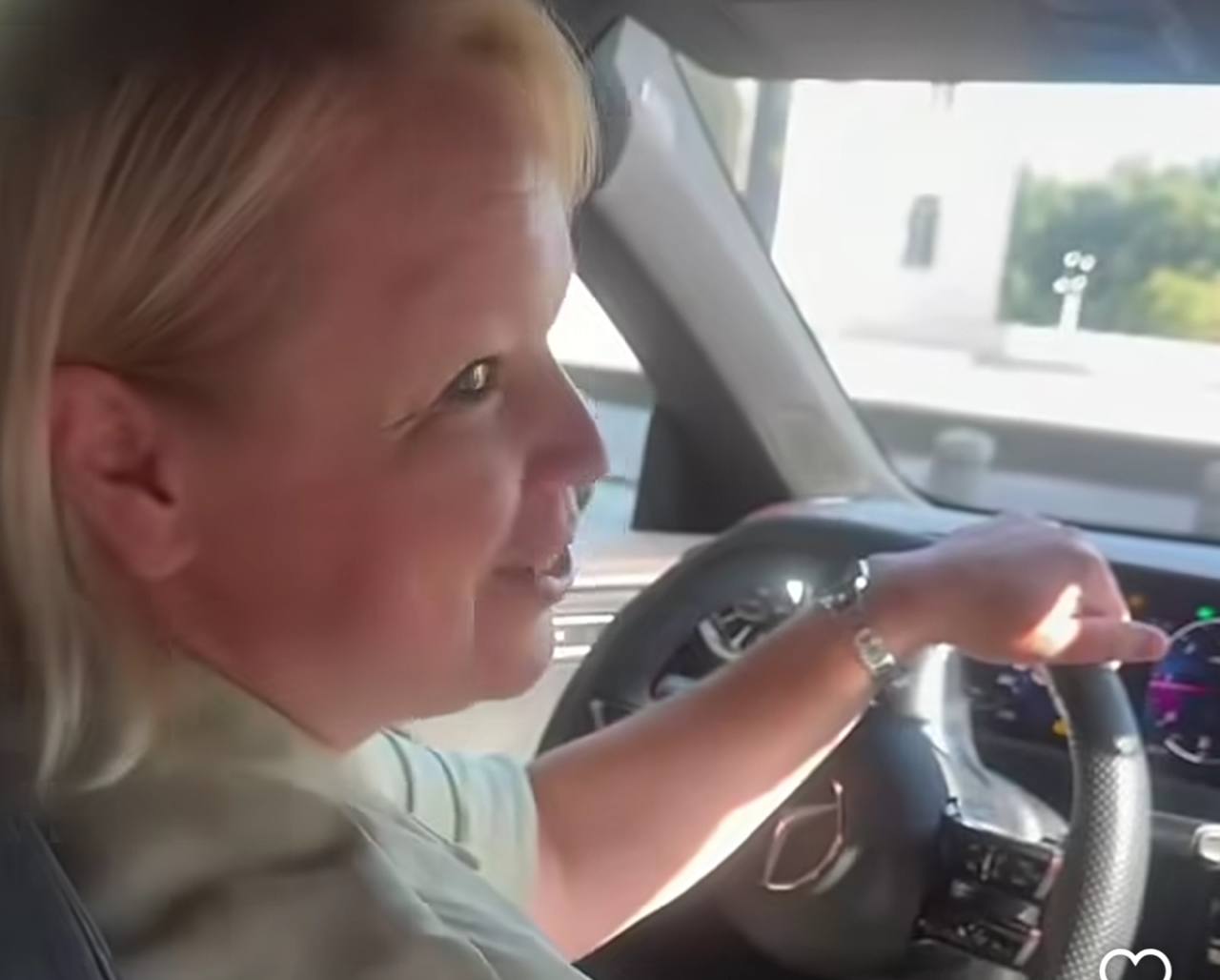
Bolt has permanently banned a female taxi driver who insulted Ukrainian women in Milan
The Bolt taxi service has permanently banned a Russian-speaking female driver from its app after she insulted and used foul language towards Ukrainian female passengers in Milan. This was reported by representatives of Bolt. “The safety of all users is our absolute priority. The behaviour shown in the video is unacceptable and incompatible with Bolt’s standards. We take reports of discriminatory and hateful behaviour extremely seriously and investigate every such case thoroughly,” the company stated. As a reminder, a high-profile incident took place in Milan a few days ago. After the journey had ended, a Russian-speaking female taxi driver began to insult two Ukrainian women, using foul language and xenophobic remarks. In particular, she shouted offensive phrases such as “sluts” and “immigrants”, and displayed openly aggressive behaviour. A video of the altercation quickly went viral on social media and caused a widespread public outcry. Anna Danylyuk, who had previously spoken about the incident on social media, confirmed that the company had informed her of the results of their investigation, reimbursed her travel expenses and offered her discount codes for future orders. She added that they had not reported the driver’s behaviour to the police because her “time in Milan was limited”.
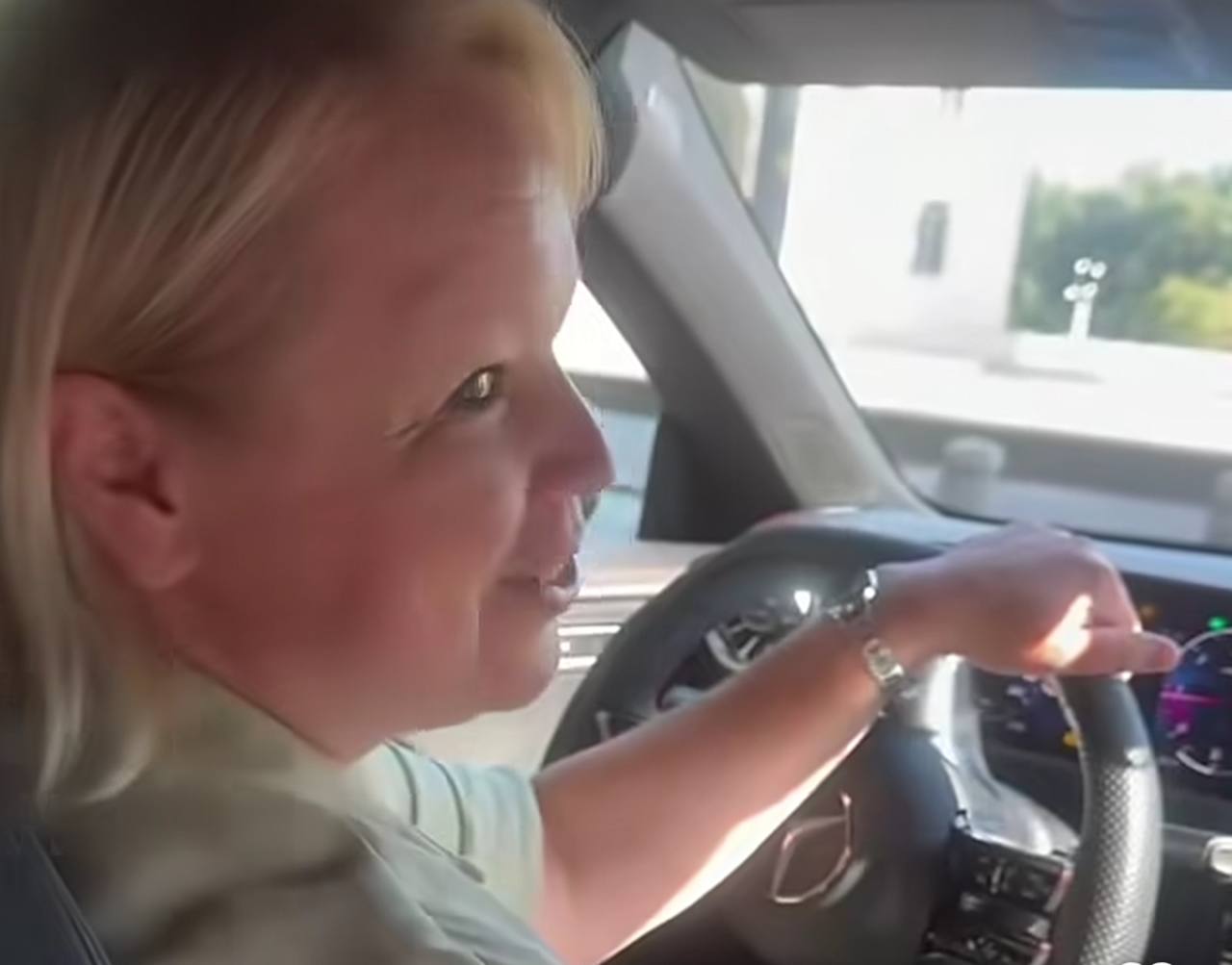
‘Sluts, you’ve all turned up here’: a Russian-speaking female taxi driver in Milan insulted Ukrainian women
An unfortunate incident stemming from linguistic animosity took place in Milan. Two Ukrainian women claimed they were subjected to verbal abuse by a Russian-speaking taxi driver after their journey had ended. The incident was reported by the Instagram channel Kyivbreaking, which also published a video of the altercation. According to the women who filmed the video, they did not speak to the driver at any point during the journey, but only spoke to each other in Ukrainian. At the end of the journey, one of the passengers thanked the driver by saying ‘Thank you’. It was immediately after this, the Ukrainian women claim, that the driver began to speak aggressively, using foul language and offensive gestures. “Throughout the entire journey, nobody spoke to the driver, Tetyana; we spoke to each other in Ukrainian. At the end of the journey, as we were getting out of the car, my friend said ‘thank you’, to which we received a response consisting of insults, swear words and gestures. The video shows only a fragment that I managed to film. Before that, there were a great many offensive words and gestures. We were in shock,” said the authors of the video. In the published recording, the driver can be heard shouting offensive remarks at the Ukrainian women, including: “You’re driving me mad, Ukrainian women,” and “Sluts, you’ve all turned up here.” There is currently no information as to whether the victims have lodged a complaint with the police or the taxi service. UA Service Hub reminds readers that in Italy, as in other EU countries, insults, discrimination or harassment on the grounds of nationality may constitute grounds for reporting the matter to the police or the service provider’s management if the incident occurred whilst the service was being provided. If you have been the victim of such behaviour, it is important to preserve evidence (videos, photos, journey details) and report the incident to the relevant authorities.