Our Blog
Useful articles and news
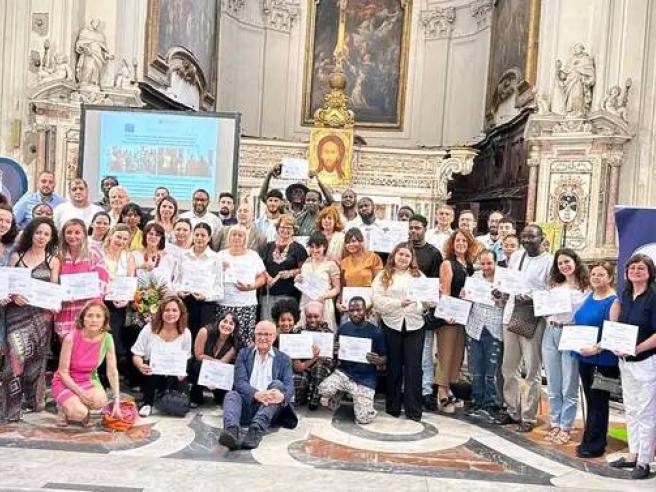
How to become a European mediator: enrolment for the course is now open in Naples
Enrolment is now open in Naples for a training course for European mediators in intercultural interaction. The University of Naples Federico II has announced enrolment for the tenth intake of the course ‘Mediatore Europeo per l’Intercultura e la Coesione Sociale’ — a programme training specialists in intercultural mediation and social integration. The programme is run by the Department of Political Science at the Università degli Studi di Napoli Federico II in collaboration with the Comunità di Sant’Egidio and the Fondazione di Comunità del Centro Storico di Napoli. During the course, participants will study migration processes and legislation, the specific features of mediation in a multicultural society, and tools to promote peaceful coexistence and social integration in Italy. The programme comprises up to 350 hours: 200 hours of lectures, seminars and thematic workshops, and 150 hours of practical training within the Comunità di Sant’Egidio. Classes will be held in person in Naples every Thursday and Saturday from 15:30 to 19:30. To receive the final certificate, participants must attend at least 70 per cent of the sessions and pass the final exam. Who can take part 📍The main requirement is a secondary school leaving certificate or an equivalent qualification. For international applicants, knowledge of Italian at a level of at least B1 is required. If you do not have a certificate, your language proficiency can be assessed during an oral interview with teachers from the Comunità di Sant’Egidio Italian language school. Special conditions apply to those with international protection status: instead of an educational qualification, you may provide confirmation of your international protection status and a declaration of your educational level, which is verified and issued by the Comunità di Sant’Egidio school. Fees and Application Procedures The course fee is 200 euros. A total of 50 places are available. If the number of applications exceeds the number of places, candidates will be selected on the basis of the documents submitted and their educational achievements. ✍️📚Applications will be accepted until 2 November 2026, 12:00. Documents may be submitted in person to the Scuola di Lingua e Cultura Italiana della Comunità di Sant’Egidio at Via San Nicola a Nilo 5–6, Naples, or sent by email to: corsiformazionefederico@gmail.com. The results of the selection process are due to be published by 6 November 2026. Upon completion of the course, participants will receive a certificate of attendance. In addition, the programme offers the possibility of recognition of up to 12 university credits (CFU) within the study programmes of the Department of Political Science, subject to the relevant decision by the faculty. The course may be of particular interest to those who are already working or plan to work in the fields of migrant integration, social support, education, intercultural communication and work with foreign communities in Italy. We can send interested parties detailed information about the course, the teaching modules and the documents required to complete and submit an application.
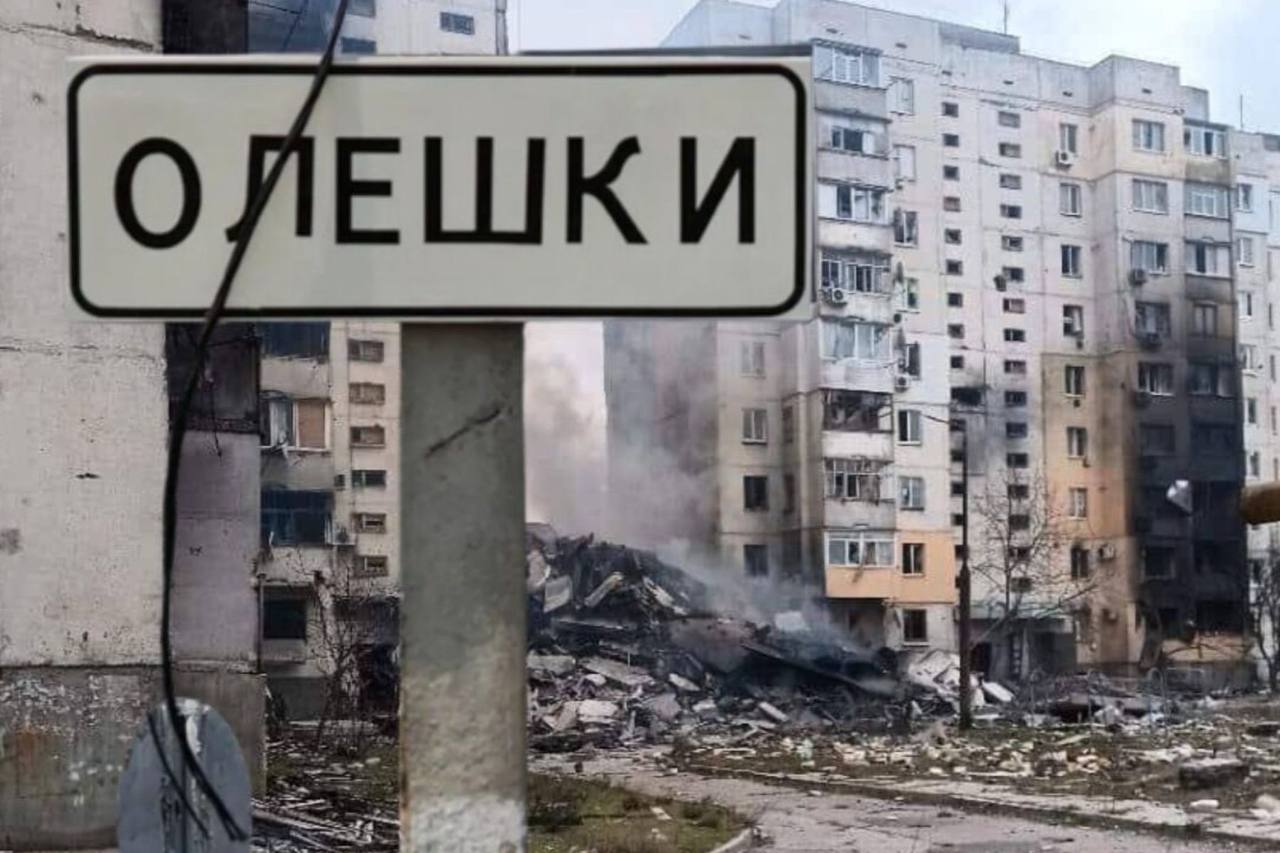
The Council of Churches is appealing to the Pope to save Ukrainians in the occupied territories from starvation
The All-Ukrainian Council of Churches and Religious Organisations has appealed to Pope Leo XIV, urging him to do everything in his power to save the residents of the occupied town of Oleshky in the Kherson region. According to the Council, the town is under a humanitarian blockade and on the brink of a humanitarian disaster. Various estimates suggest that over 6,000 people may remain in Oleshky and the surrounding areas, including around 200 children. Residents do not have sufficient access to food, drinking water, medicines and other essential aid. The Council of Churches states that the last food deliveries took place at the end of May 2026. According to their information, Russian military forces are preventing residents from leaving the town. Oleshky is situated close to the front line, so civilians face the daily threat of shelling and drone attacks. There is no electricity or gas supply, and critical infrastructure has been largely destroyed. In its appeal, the Council of Churches specifically asks Pope Leo XIV, the World Council of Churches, the World Evangelical Alliance and other religious leaders and human rights defenders to speak out and use every means at their disposal to prevent people from dying of starvation. At the same time, UN member states and the International Committee of the Red Cross have been called upon to facilitate a humanitarian mission and the evacuation of Oleshky’s residents to territory controlled by Ukraine. The Council of Churches pointed out that the Ukrainian side had repeatedly drawn the attention of international organisations to the situation in the town and had attempted to negotiate the evacuation of civilians. Oleshky also suffered widespread flooding in 2023 following the bombing of the Kakhovka Hydroelectric Power Station. The town currently remains under temporary Russian occupation.
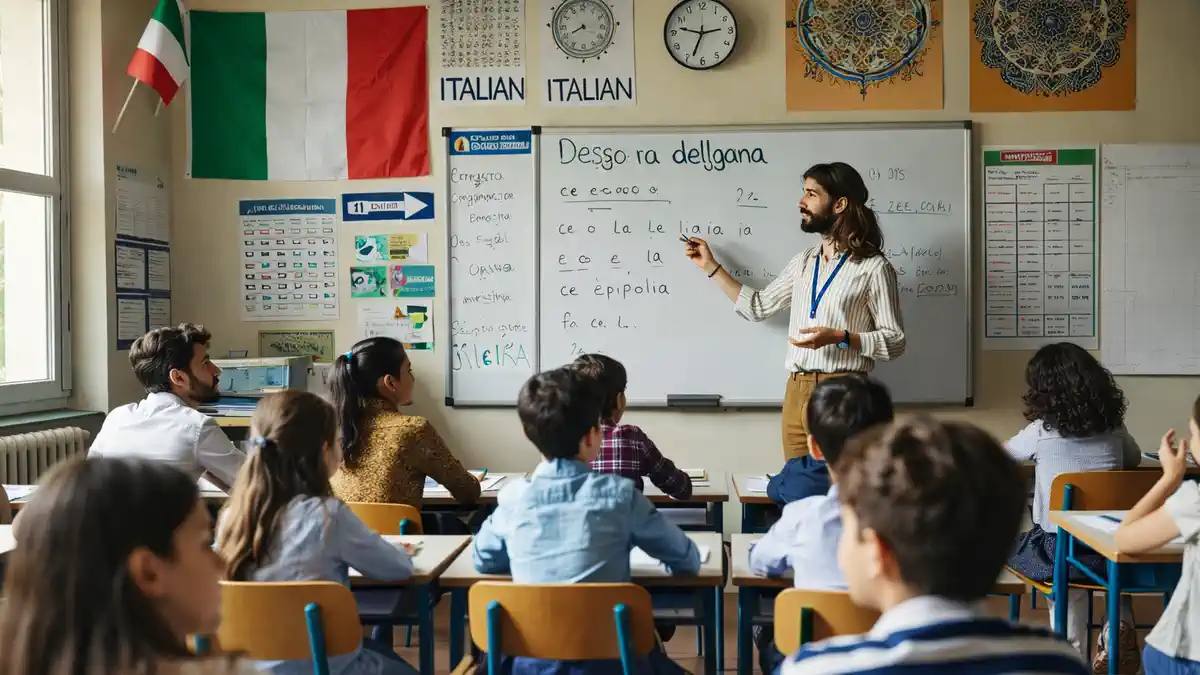
Parents of foreign schoolchildren in Italy may be required to learn Italian
🇮🇹 Parents of foreign schoolchildren in Italy may be required to learn Italian. Italian Prime Minister Giorgia Meloni has stated that the government is preparing new measures to integrate foreign pupils into the education system. One of the key proposals is to require parents of foreign children who are experiencing serious difficulties with integration to learn Italian. According to Meloni, if there are too many children in a class who do not speak Italian, the integration process ceases to function properly. The government also plans to set a cap on the number of foreign pupils in a single class. Exactly what this limit will be has not yet been announced. Separately, Meloni announced her intention to introduce a ban on wearing the burqa and the niqab in schools – that is, clothing that completely covers the face. She emphasised that pupils in Italian schools must have their faces uncovered. According to the ISMU research centre, pupils without Italian citizenship account for 11.6 per cent of all schoolchildren in Italy. At the same time, foreign citizenship does not automatically mean a lack of knowledge of the Italian language — a significant proportion of these children were born in Italy or have been studying here for a long time. Important: these are, for the time being, measures announced by the government, not legislation in force. The final rules and conditions for their application are to be set out in a future regulatory act.

How to turn an idea into your own business: a free training programme
A free training and support programme for those wishing to set up their own business is set to begin in October. 📚 100 hours of training — entirely online. The programme is aimed at young people aged 18 to 35 who are not in work, are looking for work or are unemployed, as well as young participants in the GOL programme who meet the necessary requirements. 💡 The programme covers: • business ideas and business models; • market and customer analysis; • marketing and sales; • costs, revenue and financial sustainability; • drawing up a business plan; • preparing to apply for potential support to set up your own business, including Resto al Sud 2.0. 👥 Training format: 🔹 60 hours of group training 🔹 40 hours of individual support 👩🏫 Tutor — Maryna Sydorova. She has experience in business, exports, project management, career guidance and teaching. 📩 A group is currently being formed for October. If you’re interested, please message me directly to check whether you meet the requirements and to receive further details. 📲 WhatsApp: 327 697 4060
Almost 2.6 million foreign nationals work in Italy – that is more than 10 per cent of the total workforce
The role of foreign workers in Italy continues to grow. In 2025, there were almost 2.6 million foreign nationals working in the country — accounting for 10.7 per cent of the total workforce. Moreover, it was foreign workers who accounted for a significant proportion of the growth in employment: the number of non-EU nationals in employment rose by 3.6 per cent, EU nationals by 1.2 per cent, and Italians by 0.5 per cent. 👷 Where do migrants most commonly work? 🔹 Other collective and personal services — foreign nationals account for 29.8 per cent of workers in this sector. 🔹 Agriculture — 21.5 per cent of workers are foreign nationals. 🔹 Hotels and restaurants — 19.2 per cent. 🔹 Construction — 17.9 per cent. At the same time, the proportion of foreign workers is significantly lower in the financial and insurance sectors — 1.6 per cent, in information and communication services — 3.1 per cent, and in public administration — just 0.3 per cent. 📈 Italy is increasingly in need of foreign workers In 2025, Italian companies planned to hire over 1.3 million foreign workers — a record figure and around 23 per cent of all planned hires. At the same time, in roughly half of all cases, employers found it difficult to find suitable candidates. In other words, the Italian economy needs foreign workers not just today — demand for them continues to grow. However, there remains a gap in unemployment rates between foreign nationals and Italians. In 2025, it stood at 9.6 per cent amongst non-EU nationals, 7.8 per cent amongst EU nationals and 5.8 per cent amongst Italians. The gap is particularly pronounced among women: the employment rate for women from non-EU countries stood at just 45.7 per cent, compared with 76 per cent for men. For Ukrainians, this means that the Italian labour market is gradually opening up more opportunities, not only in traditional sectors such as care work, cleaning, agriculture, catering and construction. Professional skills, qualifications and services that migrants can offer independently are becoming increasingly important. 💙💛 It is therefore important not only to look for work, but also to showcase one’s professional skills. It is worth noting that on the UA Service HUB platform, Ukrainian specialists in Italy can showcase their services, experience and portfolios, and find clients both in their own city and beyond.
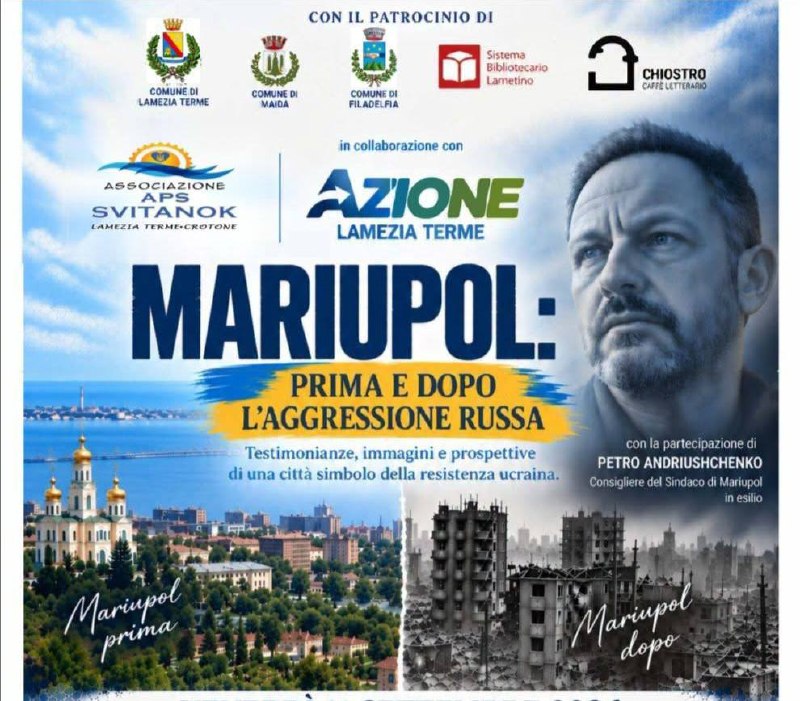
‘Mariupol before and after the Russian aggression’: Ukrainian prisoners of war to be discussed in Italy
On 11 September, the Italian town of Lamezia Terme will host a public event entitled ‘Mariupol before and after the Russian aggression’, dedicated to the plight of Ukrainians who have found themselves under Russian occupation and in captivity. The discussion will be attended by the mayors of Lamezia Terme, Philadelphia and Maida, as well as representatives of Italian and Ukrainian associations and political groups at various levels. A live link with Petro Andriushchenko, a former adviser to the mayor of Mariupol, is also planned. During the meeting, discussions will focus on the lives of Ukrainians under occupation, civilian and military hostages, as well as mechanisms for securing the release of people from Russian captivity and unlawful detention. Particular attention will be paid to the issue of guardianship for civilian hostages – what it entails, how it works, and why international attention focused on specific individuals can be an important tool for exerting pressure on Russia. They will also discuss the need to strengthen information security, political and economic support for Ukraine, and the preservation of social programmes for Ukrainians who have been forced to leave their homes due to the war. 🖼️ Two exhibitions — about those whose voices have been silenced Two themed exhibitions will be presented as part of the event: ▫️ ‘Civilian Hostages’ – about Ukrainians held captive by Russia; ▫️ ‘Olenivka’ — about Ukrainian prisoners of war who were held in a penal colony in occupied Olenivka. The organisers aim not only to shed light on the crimes of Russian aggression, but also to encourage more people to support Ukrainian civilian hostages. Among the main aims of the event are to find individuals and organisations willing to take at least one civilian hostage under their care, to draw attention to their stories, and to help spread information about the unlawful detention of Ukrainians. There will also be a separate discussion on programmes for Ukrainian children, which help them to feel safe and cared for again, and to remain children despite the war.
Against migration and in favour of closer ties with Russia: support for a new far-right party is growing in Italy
The recently formed far-right party Futuro Nazionale (‘National Future’) in Italy continues to climb the polls and now ranks fourth among the country’s political parties. This is reported by La Repubblica, citing a SWG poll. In the latest poll on voter preferences, the party – founded in June 2026 by General Roberto Vannacci – has set a new popularity record, approaching the 8 per cent mark. Prime Minister Giorgia Meloni’s party, ‘Brothers of Italy’ (Fratelli d’Italia), remains in first place with 26.8 per cent. The Democratic Party is in second place with 20.6 per cent, whilst the ‘Five Star Movement’ (Movimento 5 Stelle) is in third with 12.5 per cent. Among centre-right parties, Forza Italia has 6.9 per cent, whilst Matteo Salvini’s ‘League’ has 5.7 per cent. The ‘Alliance of Greens and the Left’ received 6.8 per cent. What does Roberto Vannacci stand for? The Futuro Nazionale programme calls for a significant restriction on migration and a policy of so-called ‘remigration’. Vannacci proposes limiting the proportion of new migrants to 4 per cent, repealing the Decreto Flussi, stepping up the deportation of illegal migrants and those who commit crimes, and making it more difficult to obtain Italian citizenship. The party also advocates reducing the powers of the EU and strengthening Italy’s national sovereignty — particularly in matters of the economy, defence, energy and agriculture. Vannacci calls for a halt to further political integration of the European Union and for a reduction in European bureaucracy. On social issues, the party takes a conservative stance: it opposes the expansion of LGBTQ+ rights and the principles of ius soli and ius scholae, and advocates a traditional model of child-rearing and measures to support the birth rate. Furthermore, Vannacci opposes the continuation of military and financial support for Ukraine, and advocates the restoration of economic ties with Russia. It is worth noting that the far right is strengthening its position not only in Italy. For instance, on 6 September, in the regional elections in Saxony-Anhalt, Germany, the ‘Alternative for Germany’ (AfD) party secured a historic victory, winning 43.8 per cent of the vote. Consequently, the rise of far-right and nationalist forces is becoming a noticeable trend in several European countries at once. It should be noted that parliamentary elections in Italy are due to take place in 2027, and Vannacci’s rapid rise in popularity is already posing an additional challenge for Giorgia Meloni and her centre-right coalition.

Artificial intelligence will help Germany identify Russian saboteurs
Following an attempted attack involving a drone carrying explosives at Leipzig/Halle Airport, Germany plans to significantly step up its defences against Russian sabotage, espionage, cyberattacks and other hybrid threats. German Interior Minister Alexander Dobrindt has presented a comprehensive security plan, which includes: 🔹 Artificial intelligence to detect spies and potential terrorists. The AI is to analyse CCTV footage, automatically recognise weapons and suspicious behaviour, and help identify individuals suspected of planning attacks or engaging in espionage. 🔹 Enhanced protection against drones. The German Federal Police will expand its mobile units, equipped with helicopters and specialised vehicles. They will be stationed in nine strategic cities — Frankfurt, Munich, Hamburg, Berlin, Stuttgart, Düsseldorf, Leipzig, Hanover and Cologne. 🔹 Protection of critical infrastructure. Water utilities, energy companies and defence enterprises may be granted greater powers to respond to drones independently, without waiting for state forces to arrive. 🔹 Biometrics and CCTV. There are plans to make wider use of facial recognition technology, particularly at railway stations. 🔹 National Cyberdome. Germany plans to create a network of digital sensors designed to detect and block cyberattack attempts. “Russia’s hybrid attacks are a daily reality,” Dobrindt stated, emphasising that such threats could intensify. It should be recalled that on 1 September, Germany officially accused Russia of a hybrid attack on Leipzig/Halle Airport and announced appropriate measures.
Top 10 countries by number of Ukrainians with temporary protection
In the countries of the European Union, around 4.38 million people who have fled Ukraine due to the war are currently under temporary protection. This is according to data from the European Commission. The top 10 countries by number of Ukrainians under temporary protection are as follows: 🥇 🇩🇪 Germany — 1,283,000 people 🥈 🇵🇱 Poland — 967,000 🥉 🇪🇸 Spain — 267,000 4️⃣ 🇨🇿 the Czech Republic — around 390,000 5️⃣ 🇷🇴 Romania — over 200,000 6️⃣ 🇫🇷 France — around 140,000 7️⃣ 🇳🇱 The Netherlands — over 120,000 8️⃣ 🇮🇪 Ireland — around 100,000 9️⃣ 🇸🇰 Slovakia — around 100,000 🔟 🇦🇹 Austria — around 90,000 At the same time, the highest number of Ukrainians per capita is not found in the largest EU countries. Slovakia, Poland and the Czech Republic lead the way in terms of the number of recipients of temporary protection per 1,000 inhabitants. 🇮🇹 And what about Italy? It should be noted that Italy is not in the top 10 in terms of the absolute number of people under temporary protection. Over 170,000 Ukrainians have arrived in Italy since the start of the full-scale war — this is the latest official figure for the total number of arrivals provided by the Italian authorities for the period up to June 2023. According to Eurostat data, 51,105 people had temporary protection status in Italy as at 30 June 2026. In other words, around 170,000 Ukrainians arrived in Italy, and around 51,000 remained registered under the temporary protection scheme as of mid-2026. At the same time, in May 2026, Italy recorded one of the largest increases in the EU — the number of people receiving protection rose by 6,250, or 15.3 per cent, in a single month. 🌎 And what about outside Europe? 🇨🇦 Canada also remains a key destination for Ukrainians. Rather than the European temporary protection scheme, special immigration measures introduced following the outbreak of full-scale war are in place here, notably the CUAET programme. In 2026, Canada continues to allow some Ukrainians who arrived under these programmes to renew their work permits. 🇺🇸 The US is accepting Ukrainians under several special schemes. In particular, Temporary Protected Status (TPS) for Ukraine has been extended until 19 October 2026. In early 2025, USCIS reported that around 103,700 Ukrainians were eligible to re-register under TPS. Separately, thousands of Ukrainians are in the US under the Uniting for Ukraine (U4U) humanitarian programme.